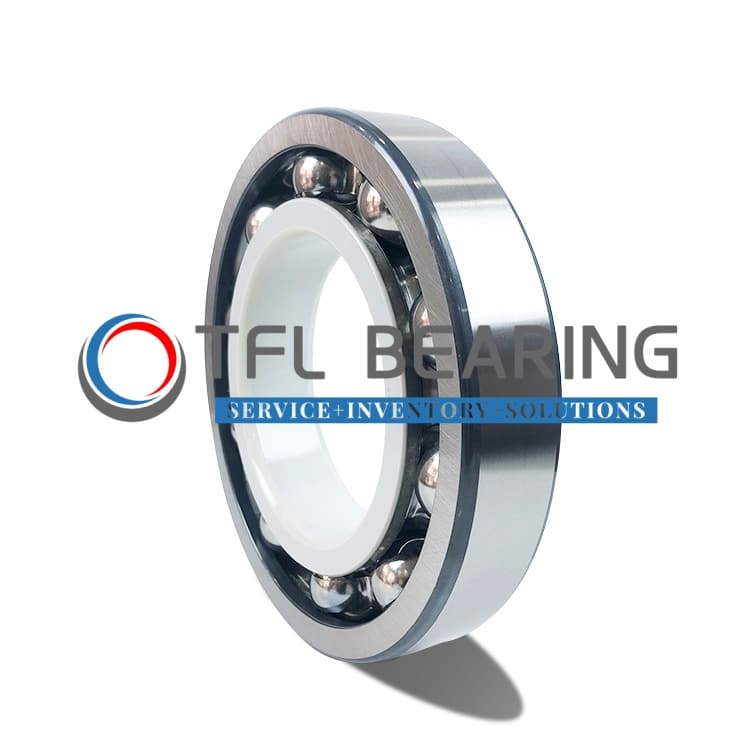
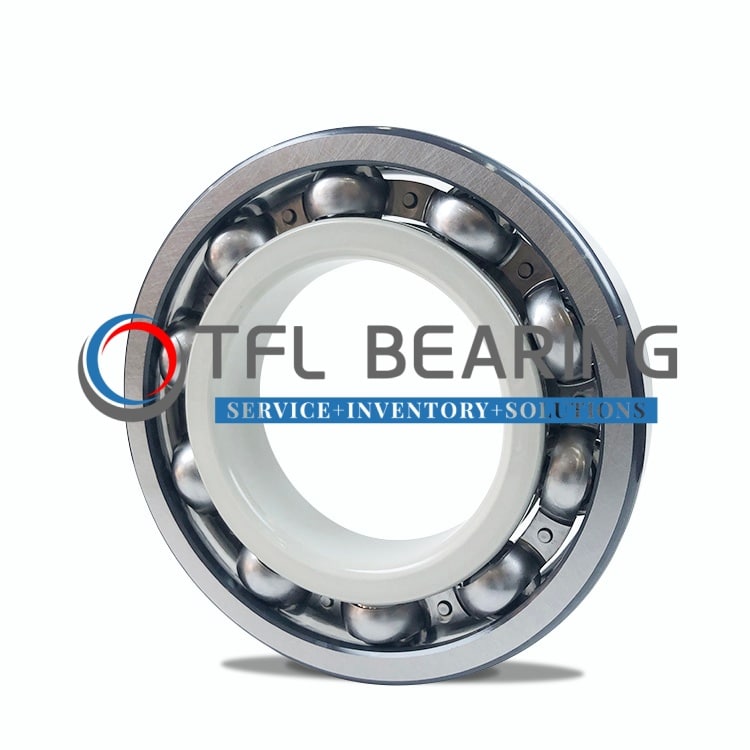
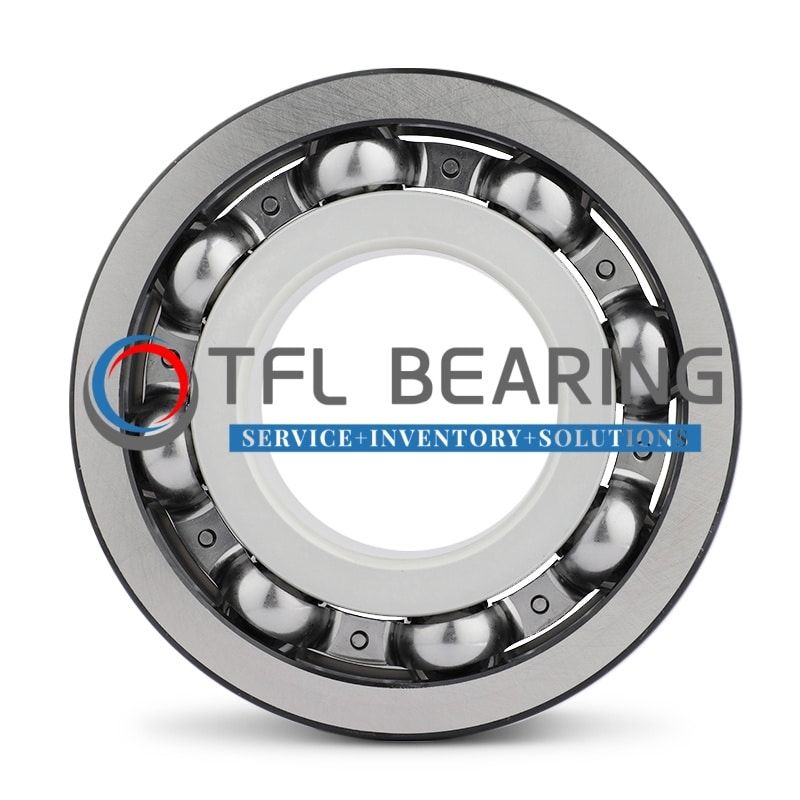
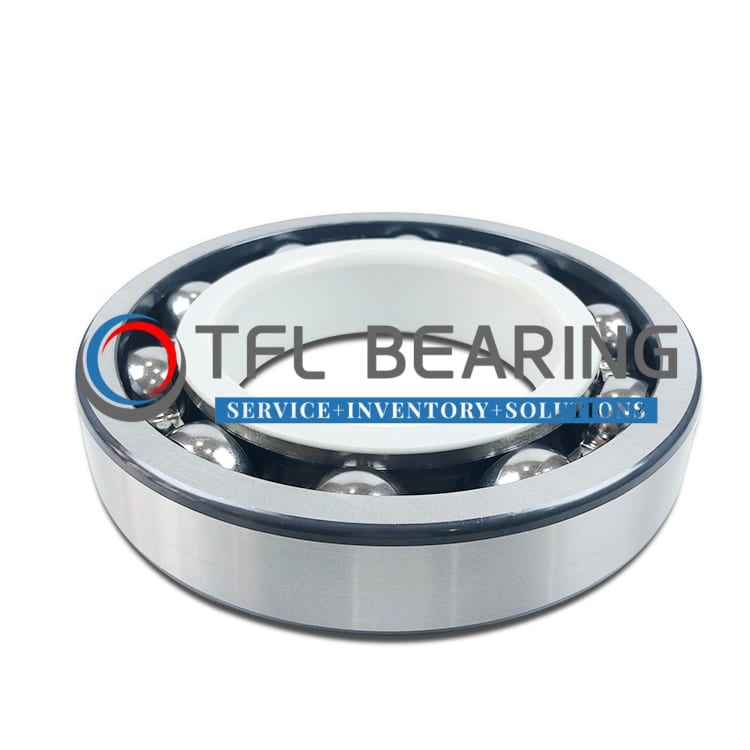
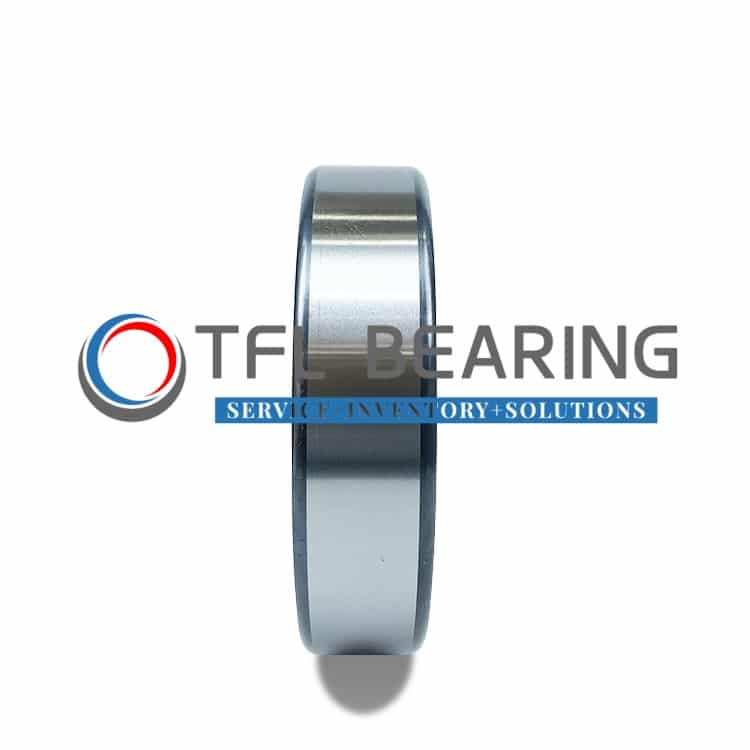
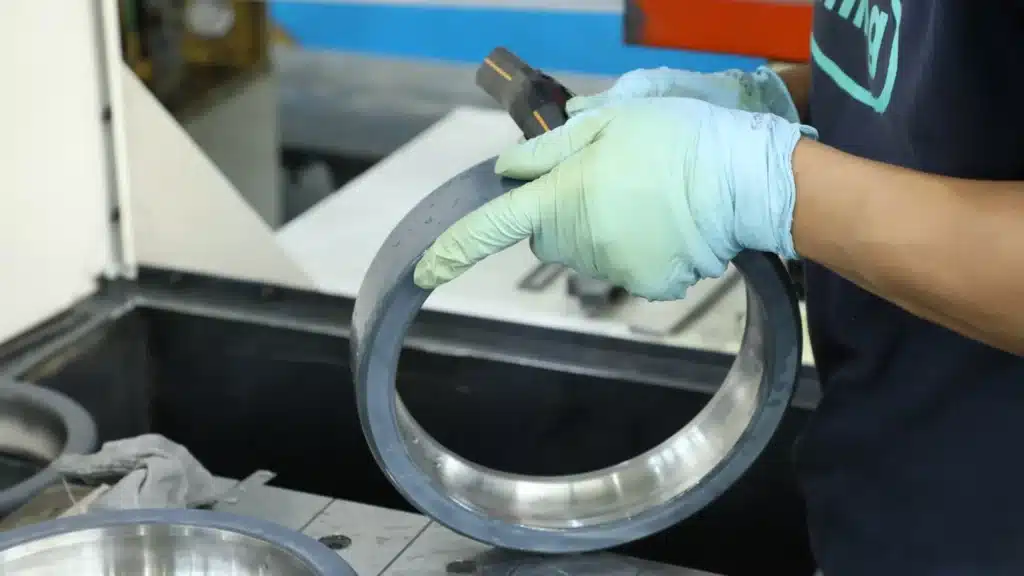
Inner Ring Insulation (VL2071): Specifically applies the ceramic barrier to the inner bore, ideal for preventing shaft current loops.
Superior Electrical Resistance: Blocks parasitic currents up to 3000V DC, effectively eliminating electrical erosion (fluting).
Perfect Dimensional Interchange: Directly replaces premium models like SKF 6317/C3VL2071 and FAG 6317-J20C-C3.
Plasma Spray Technology: Utilizes advanced plasma-spraying for a dense, durable aluminum oxide coating that adheres firmly.
TFL provides a high-reliability, cost-efficient alternative to major global brands like SKF, FAG, and NKE for the 6317/C3VL2071 model. This technical equivalent ensures the same level of protection against dielectric breakdown while optimizing procurement budgets for B2B buyers. For users requiring outer ring protection, TFL also stocks the 6317/C3VL0241 or high-temperature 6317/C4VL0241 variants.

| TFL | SKF | FAG |
|---|---|---|
| 6317/C3VL2071 | 6317/C3VL2071 | 6317-J20C-C3 |
Inner ring insulation requires a higher level of manufacturing sophistication than outer ring coating due to the smaller surface area and curvature of the bore. TFL excels in this specialized plasma spraying process, ensuring a uniform, non-porous coating that does not crack during shaft installation. By choosing TFL, you gain access to a partner that understands the nuances of inner-coated applications, offering a product that guarantees electrical isolation even when the outer ring is grounded or rotating. Our commitment to strict quality testing ensures that every 6317/C3VL2071 meets global industrial standards for dielectric strength.
Inner Ring Insulation (VL2071): A specialized 100-300 micron aluminum oxide coating applied to the inner ring’s bore and side faces.
Modified Shaft Tolerances: The bore dimensions are finished to accommodate the coating; however, specific shaft fits (usually n6 or p6) should be verified to prevent coating damage during press-fit.
Protection for Rotating Outer Rings: Ideally suited for applications where the outer ring rotates and the inner ring is stationary, or where the outer ring fit is loose.
The 6317/C3VL2071 is primarily specified for motors where the outer ring is difficult to insulate or where specific shaft grounding requirements exist. In addition to this model, we offer the 6317M/C3VL0241 (brass cage) for even higher stability.
In the rail industry, 6317/C3VL2071 bearings are used in traction motors for electric locomotives and commuter trains. Leading systems from Bombardier (Traxx series) or Alstom often utilize inner ring insulation to effectively isolate the shaft from stray currents. This protects the bearing’s rolling elements from the high-frequency discharge common in modern traction converters.
Renewable energy systems, particularly DFIG (Doubly-Fed Induction Generators) from brands like Senvion or Gamesa, face complex shaft voltage issues. The 6317/C3VL2071 is used on the non-drive end to break the circuit of circulating currents. The inner ring coating is favored here for its ability to provide stable insulation even under the varying thermal cycles of wind power generation.
In heavy industry, large 6kV or 10kV motors from ABB (AMI/HXR series) or Siemens (Simotics HV series) rely on the 6317/C3VL2071 to ensure long-term reliability. By insulating the inner ring, the motor is protected from common-mode voltages caused by VFD control, preventing costly unplanned maintenance in oil refineries and chemical plants.
*The brands and series mentioned are provided for industry illustration only. Final bearing selection should be confirmed through verification of dimensions, clearance class, insulation type, and operating conditions. For selection assistance or technical consultation, please contact the TFL engineering team for support.
Discover more related products for your needs. Check out our hot-selling bearing models that serve as trusted alternatives to major brands like SKF and FAG—offering the same performance with greater value.
"*" indicates required fields