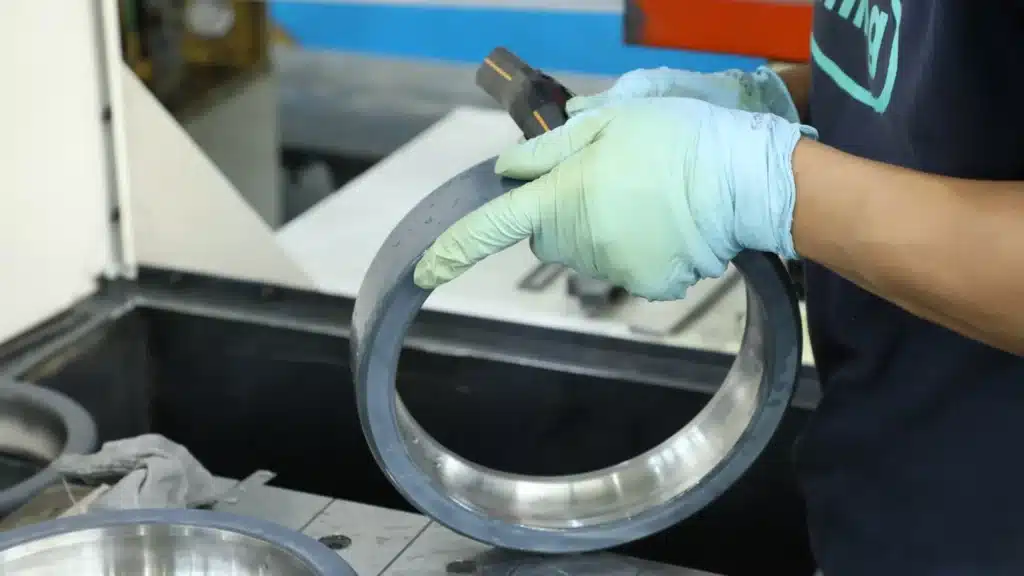

Electrically insulated bearings play a pivotal role in protecting modern industrial motors and machinery against electrical damage. In an environment dominated by Variable Frequency Drives (VFDs), renewable generation, heavy rail, mining, and oil & gas, safeguarding rotating equipment from shaft voltages and stray currents is essential for minimizing costly downtime, repair expenses, and unexpected system failures.
Both SKF and FAG, among the most recognized international bearing brands, have introduced sophisticated ranges of electrically insulated bearings engineered for high-demand sectors. This in-depth comparison evaluates their technical features, coating technologies, endurance under real-world operation, and suitability for railway, wind power, heavy industry, and OEM applications. The discussion draws on standardized test data, failure mode analysis, industry case studies, and recognized international standards such as ISO 281 and high-voltage insulation resistance protocols. All performance specifications described are based on laboratory and field test conditions; actual in-service performance is sensitive to system configuration, load profiles, installation quality, and maintenance practices.
The following structured analysis offers practical insight for procurement professionals, maintenance engineers, technical managers, and OEMs. It supports informed bearing selection to maximize equipment reliability and optimize lifecycle costs. For highly engineered applications or unique machine retrofit needs, explore TFL’s range of premium insulated motor bearings for tailored solutions.
Principles and Industrial Applications of Electrically Insulated Bearings
Electrically insulated bearings are designed with a specialized coating (typically on the outer or inner ring) to interrupt electrical current paths through the bearing assembly. This insulation prevents electrical discharge machining (EDM), pitting, and premature wear caused by stray currents circulating between shafts and grounded components. Ceramic-based coatings, especially aluminum oxide (Al₂O₃) applied via plasma spray process, deliver high dielectric strength while maintaining dimensional and mechanical stability.
Key coating performance metrics include:
- Typical insulation resistance exceeding 50 MΩ
- Breakdown voltage from 1000 up to 3000 V DC, depending on coating thickness and process
- Coating adhesion and hardness engineered to withstand machining, assembly, and long-term service
Common Industrial Application Areas
- Railway Traction Motors:
In traction drive systems, high-frequency switching and variable voltage conditions generate shaft currents that erode traditional bearings. Electrically insulated bearings substantially extend overhaul intervals and reduce unscheduled outages. - Wind Turbine Main Shafts and Yaw Motors:
Bearings installed in climate-exposed turbines must resist both electrical stress and environmental degradation – moisture and thermal cycling accelerate insulation breakdown if not properly engineered. - Industrial VFD-Controlled Motors:
Machine tools, pumps, fans, and compressors managed by VFDs experience common-mode voltages that generate harmful shaft currents. Insulated bearings are essential for maintaining uptime in these systems. - Oil & Gas and Mining Equipment:
Applications involving heavy loads, contamination, and vibration call for bearings that combine electrical insulation with robust mechanical architecture.

Objectives and Standards for Comparison
This technical evaluation addresses:
- Differences in coating materials and application processes
- Standardized dimensions and load ratings (ISO 281, ISO 15)
- Insulation durability after long-term operation (e.g., 5000-hour accelerated testing)
- Comparative service life and failure patterns
- Electrical erosion resistance and surface hardness
Product specifications and rankings rely on international standards, including ISO 281 life ratings and validated insulation resistance protocols.

Technical Specifications: SKF vs. FAG Electrically Insulated Bearings
Leading global suppliers employ proprietary materials and surface engineering to deliver consistent insulation and mechanical reliability. Key distinctions lie in coating composition, method of application, and control of process variables.
Coating Materials and Application Processes
| Property | SKF INSOCOAT | FAG Ceramic-Coated |
|---|---|---|
| Insulation Material | Plasma-sprayed Al₂O₃ | Ceramic-based coating |
| Standard Coating Thickness | 100–300 μm | 100–200 μm |
| Coating Uniformity (Tolerance) | High (<10 μm variation) | Medium |
| Microhardness (HV) | 700–1100 (VL0241, etc.) | 600–1000 (J20AA, etc.) |
| Dielectric Breakdown (DC) | 1000–3000 V | 1000–2000 V |
| Application Process | Plasma spray | Thermal spray |
| Wear Resistance | Excellent | Good |
- Plasma spray process for insulation coatings with alumina oxide ceramic delivers superior adherence and durability, critical for resisting flaking or chipping through mechanical stress.
Dimensions and Range of Bearing Types
Both suppliers manufacture a comprehensive array of standard and custom insulated bearings, including:
- Electrically insulated deep groove ball bearings
- Cylindrical roller bearings
- Tapered roller bearings
- Spherical roller bearings
These configurations suit shaft diameters from 30 mm to over 400 mm, supporting a broad set of applications from general industrial machinery to critical wind turbine and traction motor installations. Products meet ISO tolerance schemes – P6, P5, or tailored for OEM requirements.
For deeper technical review of popular models, see electrically insulated deep groove ball bearings.
Load Ratings and Precision Grades
Published dynamic and static load limits, conforming to ISO 281, feature prominently in selection. Both brands support precision classes (P6, P5), crucial for high-speed spindles, generator rotors, and similar demanding applications.
Operational Performance: Test Data and Reliability Metrics
The durability of an insulated bearing is fundamentally tied to insulation integrity, mechanical fatigue, and resistance to surface and subsurface failures in real-world machines. Industry surveys and laboratory endurance trials have supplied the basis for comparison.
Insulation Integrity: 5000-Hour Endurance Test
Data extracted from independent laboratory testing under continuous rated load reveals:
-
SKF INSOCOAT:
- 98% of samples maintain insulation resistance >1 MΩ post 5000 hours
- Coating remains free of delamination and visible surface degradation
-
FAG Ceramic-Coated:
- Several samples register insulation resistance between 0.7 and 0.9 MΩ after prolonged exposure
- Minor surface microcracking observed in select specimens under mixed humidity/temperature cycling
-
Electrical Erosion Resistance:
- Both coatings significantly reduce EDM risk, with plasma-sprayed variants demonstrating enhanced resilience under cyclic stress
Service Life and Failure Rates (Conforming to ISO 281)
| Metric | SKF INSOCOAT | FAG Ceramic-Coated |
|---|---|---|
| Expected Operating Life | 50,000–80,000 hours | 50,000–70,000 hours |
| Annual Wind Mainshaft Failures | <0.5% | 0.7–1%* |
| Machine Tool Endurance | High | Good |
*Figures reflect published averages for global fleet populations. Environmental differences, alignment, and lubrication can yield local variations.
Electrical Erosion Resistance and Surface Hardness
-
Microhardness (HV):
- SKF (Plasma-sprayed): 700–1100
- FAG (Thermal spray): 600–1000
High surface hardness correlates with enhanced wear resistance and maintains coating function under repeated loading.
-
Coating Adhesion:
- Plasma-sprayed coatings generally exhibit superior bond strength, lowering the risk of insulation failure due to spallation or chipping.
Failure Mode Analysis: Observed Patterns
- EDM Pitting and Fluting:
- Both brands’ bearings suppress common pitting and fluting associated with high-frequency VFD operation.
- Coating Microcracks:
- Extended service in high-moisture environments can induce fine cracking; samples show SKF’s process offering marginally greater resistance.
- Lubrication Stability:
- Endurance runs under controlled temperature reveal no marked advantage between the brands in lubricant breakdown or temperature rise.
Industrial Case Studies: Real-World Performance Insights
Practical deployment feedback underscores the bearing selection process. Data from OEMs and service organizations highlight the combined benefit of careful insulation engineering and process quality.
Railway Traction Motor Bearings
Deployment of industrial insulation solutions for traction motors in major passenger and freight rolling stock has yielded:
- Improved Insulation Retention:
- Higher coating uniformity helps withstand repetitive electrical pulse stress; systems report fewer trainset withdrawals for bearing defects.
- Longer Overhaul Intervals:
- Routine maintenance cycles have been extended from approximately 4000 to 7000 operating hours, improving system availability.
Wind Turbine Main Shaft Bearings
Analysis of wind fleets operating in complex environments indicates:
-
Field Failure Rates:
- SKF-equipped turbines record less than 0.5% annual bearing failures; critical inspections detect zero full-depth insulation cracks after harsh weather events.
- Comparable FAG installations average 0.7–1% annual failure, attributed to localized coating flaws or environmental load surges.
-
Long-Term Coating Performance:
- Both brands demonstrate high insulation integrity, especially when installed in accordance with manufacturer protocols.
VFD Motor and Top Drive System Bearings

In industrial motors and oilfield top drive systems:
- Fluting and Pitting Defenses:
- Plasma-sprayed oxide coatings substantially reduce fluting frequency, limiting repair interventions.
- Lubricant Compatibility Maintained:
- Insulated layers show no interference with high-performance greases; bearing temperature rise remains below operational thresholds.
Observed benefits include:
- Increased preventive maintenance intervals
- Dramatically lowered unplanned outages
- Enablement of predictive diagnostics based on electrical signature monitoring
Maximize Your Motor’s Reliability
Reduce electrical erosion risks with our high-performance insulated bearing solutions. Our technical team can help you select the exact equivalent or custom specification for your VFD applications.
Advantages and Limitations: Side-by-Side Review
| Brand | Principal Advantages | General Limitations |
|---|---|---|
| SKF | Uniform plasma-sprayed insulation, superior adhesion and hardness, robust insulation retention, strong erosion protection | Generally higher initial cost |
| FAG | Competitive pricing, adequate insulation for stable operating environments | Prone to localized microcracking in long, high-cycle operation; resistance to environmental extremes diminished |
Selection insights:
- For continuously operated, high-load, or VFD-intensive systems – such as wind turbines or advanced industrial drives – prioritize bearings with highly uniform and deeply bonded coatings for optimal protection.
- In installations where economic constraints are primary and cycles are shorter, FAG’s ceramic-coated offerings present an adequate and reliable alternative.
Purchasing and Installation Guidelines for Electrically Insulated Bearings
Meticulous selection and installation of electrically insulated bearings are crucial for preserving insulation function, maximizing bearing lifespan, and controlling operating costs.
Selection Criteria
- Voltage and Frequency Exposure:
- Deploy insulated bearings for all VFD-driven or ≥500 V AC/DC machine applications.
- Target Insulation Resistance:
- Select products delivering insulation resistance >1 MΩ, with guaranteed minimums above 50 MΩ.
- Coating/Application Method:
- Favor plasma spray-applied aluminum oxide with thickness between 100–300 μm for demanding uses.
- Mechanical Ratings:
- Confirm load ratings and ISO 281 precision grades match design requirements.
Installation Checklist
Before Assembly:
- Inspect shaft and housing surfaces for nicks and contamination
- Avoid striking or prying coated surfaces with metallic tools
- Apply only lubricants tested for compatibility with insulating ceramics
- Ensure bearing preload and seating adhere to ISO 281 or OEM recommendations
During Installation:
- Use specialized installation sleeves and ensure coaxial alignment
- Verify axial and radial clearance are within specified tolerances
- Discharge static electricity from personnel/equipment to prevent arc-induced coating damage
Routine Maintenance:
- Perform insulation resistance checks every 2000 operating hours
- Monitor system for anomalous temperature rise using thermal imaging
- Regularly assess grease condition and exterior coating integrity during maintenance stops
For retrofitting unique machine types or to solve persistent insulation failures, pursue custom insulated bearing solutions. Engineering teams can specify dimensional adaptations, coating thickness, or enhanced material combinations based on application-specific requirements.
Compatibility with global imports is facilitated by the insulated bearing cross reference guide, ensuring seamless replacement and stocking across multi-brand fleets.
Technical Disclaimer and Best Practice Recommendations
Performance data and reliability projections presented are sourced from industry trials, ISO certified laboratory studies, and published field analyses. Service life and failure rates are influenced by local environmental conditions, operating voltages, mechanical loads, and routine care. Procurement and engineering design decisions should always be validated with up-to-date manufacturer specifications and direct consultation with technical experts.
Best practice guidelines:
- Conduct insulation resistance verification under representative local operating conditions before large-scale deployment.
- Monitor insulation performance closely in environments subject to moisture ingress or temperature fluctuations.
- Consider tailored service packages for ongoing support, predictive monitoring, or on-site testing – particularly in mission-critical systems.
Engineering and procurement teams are encouraged to consult specialists for detailed technical alignment – including selection, installation, and maintenance of electrically insulated bearings for optimal system performance.
Purchasing and Installation Guidelines
Meticulous selection and installation are crucial. Favor plasma spray-applied aluminum oxide for demanding uses and ensure axial and radial clearance are within specified tolerances.
For retrofitting unique machine types or to solve persistent insulation failures, pursue custom insulated bearing solutions. Engineering teams can specify dimensional adaptations based on application-specific requirements.
Frequently Asked Questions About Insulated Bearings
Why are insulated bearings necessary for VFD motors?
VFDs generate high-frequency common-mode voltages. Without insulation, these voltages create currents that cause “fluting” or pitting on bearing races, leading to premature failure.
What is the main difference between SKF and FAG insulated bearings?
SKF INSOCOAT typically uses a plasma-spray process resulting in higher coating microhardness and uniformity, while FAG offers a robust, cost-effective ceramic-coated solution suitable for standard industrial cycles.
Can these bearings be retrofitted into existing motors?
Yes. Insulated bearings follow standard ISO dimensions, allowing them to be direct “drop-in” replacements for standard bearings in equipment experiencing electrical erosion.
What maintenance is required for insulated bearings?
Beyond standard lubrication, we recommend performing insulation resistance checks every 2000 operating hours to monitor coating integrity.
Technical Disclaimer
Note: Performance data is sourced from industry trials and ISO certified studies. Procurement decisions should be validated with up-to-date manufacturer specifications. Engineering teams are encouraged to consult specialists for detailed technical alignment.
Need a direct replacement or a technical cross-reference?
Explore our Insulated Bearing Cross Reference Guide or View Our Full Catalog.
Note: The information contained here serves as technical reference. All values, endurance statistics, and recommendations are based on specific test cases and published studies. These do not guarantee identical results in all applications and should not be substituted for manufacturer or engineering guidance when specifying components for safety-critical or high-value equipment.